Nala
The Glass Bead GameNala is Prince Ravana’s younger son and Dasa’s half-brother, made heir to the throne despite Dasa’s prior claim as the firstborn. His succession brings Dasa back within reach of the royal world from which he had been removed; later, Nala’s relationship with Pravati turns that old displacement into a personal grievance, and Dasa kills him during a countryside hunt. Nala’s brief place in the tale joins dynastic rivalry to the private loss that propels Dasa into flight.
Identity and Succession
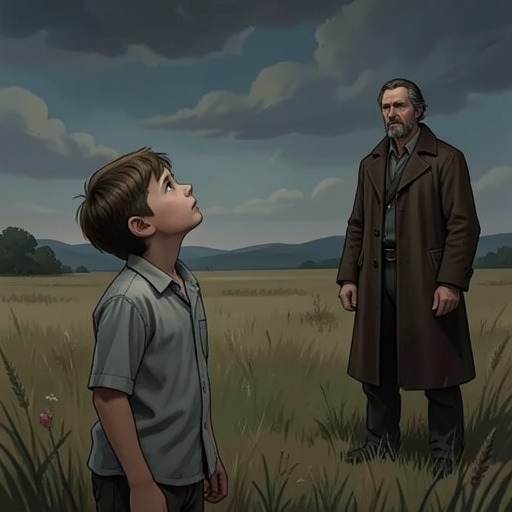
Nala is born to Ravana’s second wife, a beautiful and ambitious woman who resents the elder Dasa and wants her own son to rule. Though Dasa is Ravana’s firstborn, his stepmother schemes to estrange him from his father and eventually remove him. Vasudeva, a Brahman at Ravana’s court, learns of the plan and watches over Dasa, judging the boy to have inherited his mother’s piety and sense of justice. Nala’s claim thus originates not in a contest between the brothers themselves, but in their mother’s effort to redirect the succession.
When the herdsmen return to the vicinity of the capital, they hear that the aging Ravana has appointed Nala to succeed him. The prince is described as frail in the narrative’s account of his father, not as Nala himself; Nala is now young enough to be called the young Rajah. His appointment gives public form to the earlier intrigue: the firstborn has been displaced, and Nala is to inherit the rulership.
Return to Dasa’s Story
Dasa has grown up among herdsmen, far from the court and with only faint memories of the city. Hearing of the succession festival awakens his curiosity about the world of townspeople and nobles that, he knows, once belonged to him. The herdsmen must deliver butter for the festival sacrifices, and Dasa is selected as one of the three young men entrusted with the task. Nala’s accession therefore draws Dasa toward the capital before either brother meets the other in the decisive later conflict.
The narrative makes the distance between their positions tangible. Nala is installed as heir in a royal ceremony, while Dasa approaches the city as a herdsman carrying a court offering. Dasa’s awareness that the aristocratic world was once his own gives the festival more than spectacle: it confronts him with the life and status lost through the succession struggle.
Nala and Pravati
Later, Nala comes with troops, horses, attendants, and a supply train to hunt in the countryside near Dasa’s home. The arrival of the court unsettles the neighborhood, but Dasa initially avoids the hunters and courtiers, continuing his work in the fields and at the mill. During this period Pravati disappears. Dasa searches the hut, his father-in-law’s house, the fields, and even the well, but cannot find her or discover what has happened.
The youngest of Dasa’s brothers-in-law finally tells him that Pravati is with the Rajah. Dasa watches the encampment from concealment in a tree and sees Nala return from riding; when the prince enters his tent, Pravati comes forward to welcome him. The sight confirms the betrayal for Dasa. Nala’s role in the tale is consequently bound to a reversal: the prince who inherited what Dasa had lost now possesses the woman around whom Dasa has concentrated his hopes and affections.
Death and Consequences
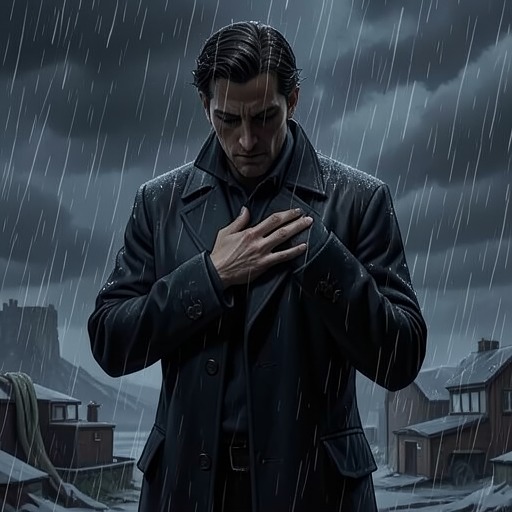
Dasa lurks around Nala’s camp with the sling he once used as a herdsman, repeatedly approaching when the prince’s tent seems unguarded and retreating when guards appear. After spending a day and night moving through the woods near his hut, the mill, the fields, and the hunting camp, he hides again in the trees and waits. When Nala steps outside the tent, Dasa slips down from his branch and strikes him in the forehead with a stone. Nala falls motionless; before servants swarm around the camp, Dasa escapes into the bamboo thickets.
The killing is the culmination of Dasa’s grief and rage, but its immediate effect is not triumph alone. In the instant of the throw, Dasa feels as if he were also casting away his own life; after Nala falls and a sudden silence follows, an instinct to survive drives him into hiding. Once safe, he first feels revulsion at having escaped, then a defiant will to live. Nala’s death thus brings about the fugitive existence that precedes Dasa’s later encounter with the yogi.
Narrative Function
Nala appears within the book’s fictional “Indian Life,” one of the imaginative biographies written by Knecht during his years of free study. These “Lives” are officially assigned exercises in which students project themselves into a chosen past era and compose a fictitious autobiography; they allow historical and stylistic exploration while giving youth’s creative impulse a legitimate outlet. The Indian tale places Nala in a dynastic story of succession, love, murder, and flight, but its attention soon shifts to Dasa’s understanding of the life he has lost and the experiences he cannot simply dismiss as illusion.
That later reflection sharpens the significance of Nala’s place in the plot. The yogi names Dasa’s life “Maya,” and Dasa gradually recognizes that the word encompasses his youth, his happiness and misery, and his love for Pravati. Yet he cannot at once treat those experiences as empty appearances: they have formed his attachments and led to Nala’s death. Nala is therefore both the object of a concrete revenge and a turning point in the tale’s inquiry into how intensely lived suffering can be called illusion without ceasing to matter to the person who has endured it.